Homer Simpson and "Affective Forecasting": Why We Always Say "I'll Do It Tomorrow"
We all know the familiar lie: "I'm too tired today, but tomorrow I'll wake up refreshed, motivated, and ready to tackle this whole list!" Discover the cognitive bias known as affective forecasting, why brain imaging shows we treat our future selves like total strangers, and how to stop offloading your hardest work onto "Future You."
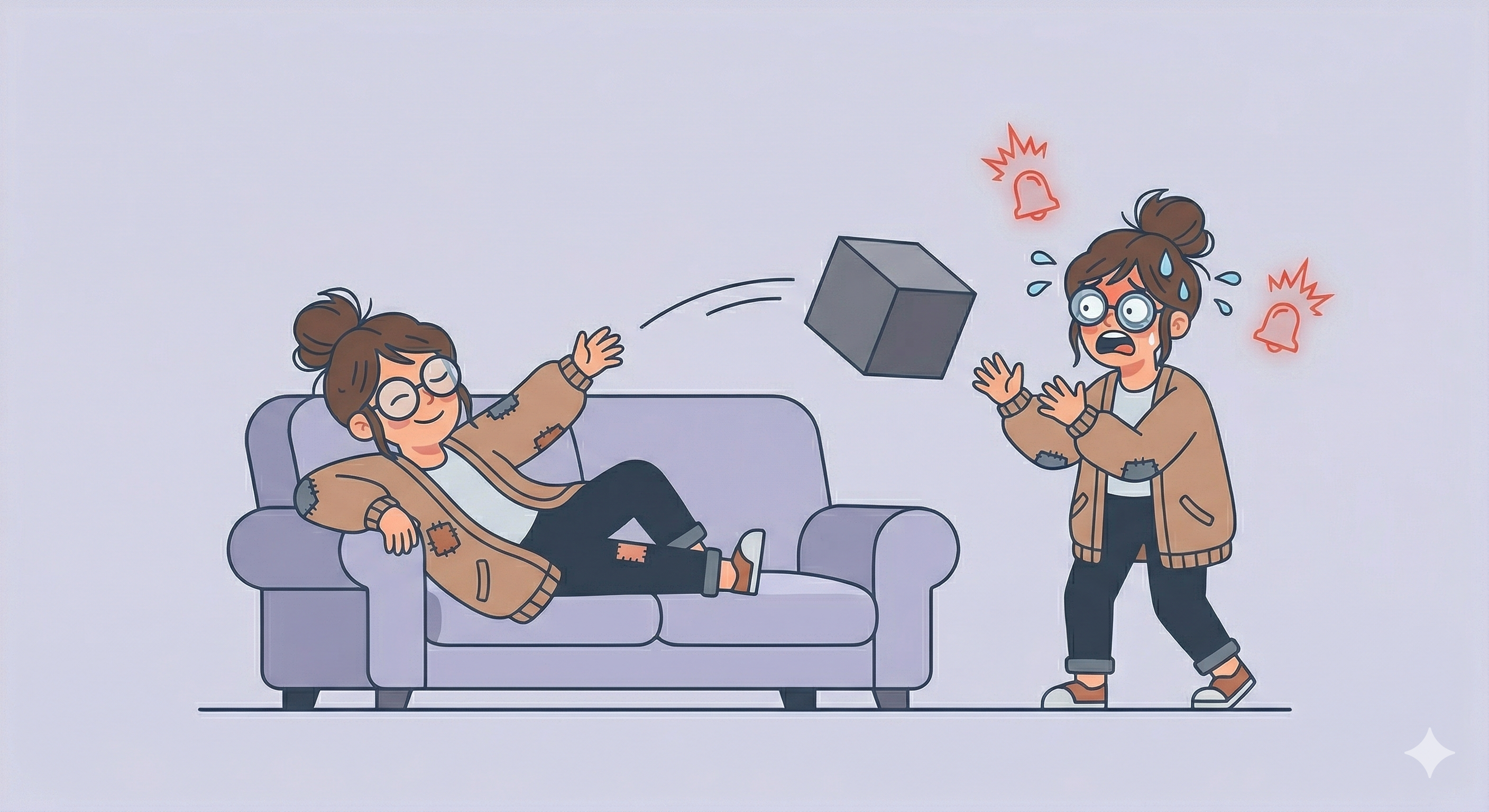
It is 11:00 PM on a Friday night, and as I am lying in bed, I feel incredibly ambitious. I set my alarm for 6:00 AM and make a firm promise to myself: Tomorrow morning, I am going to wake up early, go for a 5-mile run, deep-clean the garage, and finally organize my taxes. As I drift off to sleep, I feel highly motivated and proud of myself.
But then, Saturday morning arrives. The alarm blares at 6:00 AM, and the incredible surge of motivation I felt just seven hours ago has completely vanished. The idea of running sounds like literal torture, and the garage can definitely wait. I hit the snooze button, pull the warm covers up to my chin, and tell myself, "I'll do it on Sunday. I'll definitely have more energy on Sunday." For years, I lived in this exact cycle. I could not understand why "Nighttime Me" was so disciplined and ambitious, while "Morning Me" was a complete slacker.
As it turns out, I wasn't just being lazy. I was falling victim to a well-documented cognitive bias.
The Illusion of Tomorrow
Humans are notoriously terrible at predicting how we will feel in the future, a psychological phenomenon that researchers call "affective forecasting". According to Harvard University psychologist Dan Gilbert, we heavily rely on our present emotional state to predict our future emotions. Think about what happens when you go grocery shopping on an empty stomach versus after a large meal. If you shop while hungry, your cart ends up full of junk food because you assume you will always be this hungry. If you shop while full, you buy far less.
This exact same bias drives procrastination. When you look at a dreaded task today, you feel stressed and anxious. But the moment you decide to put that task off until tomorrow, you experience an immediate rush of relief. Your brain mistakenly uses that present feeling of relief to predict how you will feel the next day, tricking you into thinking, "I will feel great tomorrow, so I will actually want to do the work then!".
Of course, when tomorrow arrives, you are right back in the present moment, feeling the exact same dread and looking for another escape route. The Stranger in Your Brain If you have ever felt like the version of yourself making the to-do list is a completely different person than the one who has to execute it, neuroscientists have proven you are literally right. Researcher Hal Hirschfield utilized functional magnetic resonance imaging (fMRI) to scan people's brains while they thought about their present self, their future self, and a complete stranger. The results were staggering. The areas of the brain that lit up when participants thought about their "future self" were the exact same areas used when thinking about a total stranger. Because of this mental disconnection, we lack empathy for our future selves. We easily offload our unpleasant chores, stressful deadlines, and difficult workouts onto "Future You" because, neurologically speaking, it doesn't feel like our problem. We are just dumping our heavy burdens onto a stranger. The Nobel Prize-winning behavioral economist Richard Thaler often jokes that humans are less like rational economic beings and much more like Homer Simpson. In one classic episode, Marge warns Homer that he will eventually regret not spending more time with his kids. Homer wisely replies: "That's a problem for future Homer. Man, I don't envy that guy".
Bridging the Gap
To beat procrastination, you must stop waiting for the perfect mood to strike. Society sells us the myth that motivation must precede action, but psychologists have long proven that it is the other way around: motivation follows action. Furthermore, you need to build empathy for your future self and break the illusion that tomorrow will magically be easier. One of the most effective ways to do this is by tracking hard data that proves your brain's emotional predictions are wrong. This is where specialized tools like the Focumi app can be incredibly powerful. Focumi is designed specifically around these psychological realities. After you complete your work for the day, Focumi's Evening Check-Out requires you to log how you actually feel post-task. Over time, the app calculates an objective "Affective Forecasting Stat," showing you the exact percentage of times you felt Relieved or Proud after simply taking action. When you can visually see the data proving that 85% of the time you actually feel great after doing the work, it becomes much harder for your brain to trick you with the "I'll feel more like it tomorrow" excuse. Focumi grounds your fantasies in reality, helping you close the gap between who you are today and who you want to be tomorrow.
The next time you catch yourself saying, "I'll do it tomorrow," pause and recognize the trap. Do your "Future Self" a massive favor. Take one tiny step today—they will thank you for it tomorrow.