The Productivity Trap: Why Timers and Blockers Aren't Curing Your Procrastination
Have you ever set a 25-minute focus timer only to spend the entire time staring at a blank screen in absolute panic? Productivity hacks like the Pomodoro technique and website blockers often fail because they treat procrastination as a time-management issue. The truth is, chronic delay is an emotional problem, and you can't cure an emotional "freeze" response with a ticking clock.
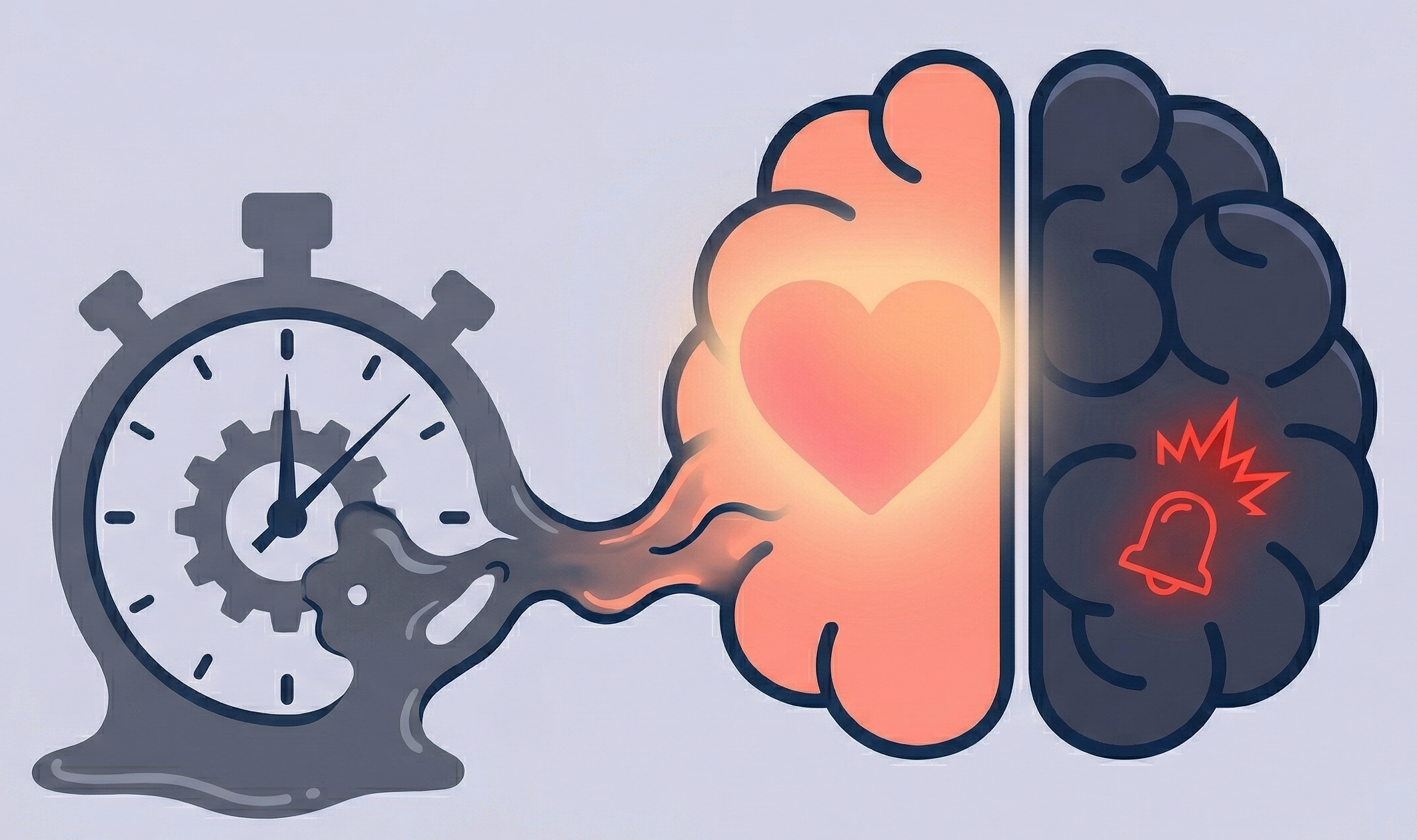
A couple of years ago, I hit a massive wall with a major project I had to finish. I was so behind that I decided to go into extreme lockdown mode. I downloaded three different website blockers to lock myself out of social media, closed all my browser tabs, and confidently set a 25-minute Pomodoro timer. This was it. I was finally going to be productive. I clicked "Start" on the timer. And then... I froze. My chest got tight. The little ticking sound from the app didn't make me want to work; it made me feel like I was defusing a bomb. Five minutes into my forced focus session, I found myself standing in the kitchen, aggressively scrubbing the inside of my microwave. I had successfully blocked my digital distractions, but my brain just found a physical one instead. If you’ve ever had a similar experience, you already know the dirty little secret of the productivity industry: time-management tools do not cure chronic procrastination. The Great Time-Management Myth For decades, we’ve been sold the myth that procrastination is a character flaw caused by laziness or a lack of discipline. The supposed cure is always more structure: color-coded planners, strict schedules, ticking timers, and digital blockers. But these tools fundamentally misunderstand why we put things off. Procrastination is not a time-management problem. It is an emotion-management problem. We don't avoid our tasks because we don't know how to schedule them; we avoid them because we don't know how to handle the negative feelings—like anxiety, boredom, or fear of failure—that the task triggers. When you look at a daunting task, your brain's fear center (the amygdala) perceives those negative emotions as an actual psychological threat. To protect you, your brain triggers an avoidance response, demanding immediate relief from the discomfort. You delay the task, and instantly, you feel a wave of relief. You have just been emotionally hijacked. Why Timers and Blockers Fail When you understand that procrastination is an emotional "fight, flight, or freeze" response, it becomes obvious why traditional productivity hacks often fail. If you are terrified of failing at a task, setting a 25-minute Pomodoro timer doesn't make the task less scary. It just puts a ticking countdown clock next to your anxiety! For people who are already overwhelmed, this artificial pressure can actually make the "freeze" response worse. Similarly, website blockers only cut off your usual escape routes. If your brain is desperate to escape the emotional pain of a task, blocking Instagram won't magically make you focus on your work. Your brain will simply find another way to repair its mood—like taking a sudden nap, eating a snack, or in my case, deep-cleaning a microwave. You cannot cure an emotional freeze response with a rigid system. Fixing the Root Cause, Not the Symptom To actually beat procrastination, you have to stop trying to manage your time and start managing your mind. Instead of trying to force yourself to work, you need to lower the emotional threat of the task. Here is how you can start tackling the root cause: 1. Label the Emotion Before You Start Before you even attempt to open your laptop or start a task, pause and figure out what you are feeling. Are you anxious? Bored? Resentful? Overwhelmed? Explicitly naming the emotion you are experiencing reduces the activity in your brain's fear center, cooling down your panic so your rational brain can step in. This is where specialized tools are stepping in to replace outdated timers. For instance, the Focumi app was built entirely around this psychological reality. Instead of just giving you a to-do list, Focumi’s daily loop requires you to do a Morning Check-In where you explicitly name the task and label the specific negative emotion blocking you from doing it. By forcing you to acknowledge the feeling right away, the app helps defuse your brain's panic button before you even try to work. 2. Break the Physical Freeze When you are completely paralyzed by task dread, sitting still and staring at your computer screen is the worst thing you can do. Your nervous system is stuck in a freeze state. Instead of setting a timer to work, set a timer to move. Doing something physical, like shifting your weight or walking around the room, breaks the neurological freeze response. The Focumi app actually has a brilliant emergency feature for exactly this scenario. If you are totally paralyzed, you can tap a lightning bolt "Help" button and select "I'm frozen". The app immediately hides your to-do list and guides you through a 60-second physical movement timer and a breathing reset to calm your nervous system, followed by asking you to name just one tiny micro-action you can take.